Bathroom Remodeling · Woodland Hills · November 12, 2026 · 8 min read
Tub to Shower Conversion in Woodland Hills: Costs, Steps, and Mistakes

A tub to shower conversion is one of the most requested bathroom projects we build in Woodland Hills. The standard 60-inch alcove tub in a 1950s or 60s Valley home takes up prime floor space, gets used a few times a year, and becomes harder to step over as you get older. Replacing it with a walk-in shower can make a small bathroom feel larger, brighter, and safer.
A good conversion is more than pulling a tub and tiling the opening, though. The drain, the floor framing, the waterproofing, and whether you go curbless all change the cost and the result. This guide covers typical Los Angeles-area costs, the steps in order, and the mistakes we fix most often, drawn from 15+ years and more than 2,000 completed projects.
When a Tub to Shower Conversion Makes Sense
A conversion pays off most when the tub is rarely used and the bathroom is one you use every day. In our Woodland Hills projects, the primary bathroom is the usual candidate, because the homeowners shower daily and the tub has become a place to store bath toys or cleaning supplies.
- Nobody in the household takes baths more than a few times a year
- Stepping over a tub wall is becoming a safety concern for you or a parent
- The bathroom is small and a tub makes it feel cramped
- The existing tub, tile, or valve is failing and needs replacement anyway
- You want features a tub cannot offer, such as a bench, a handheld wand, or a wider entry
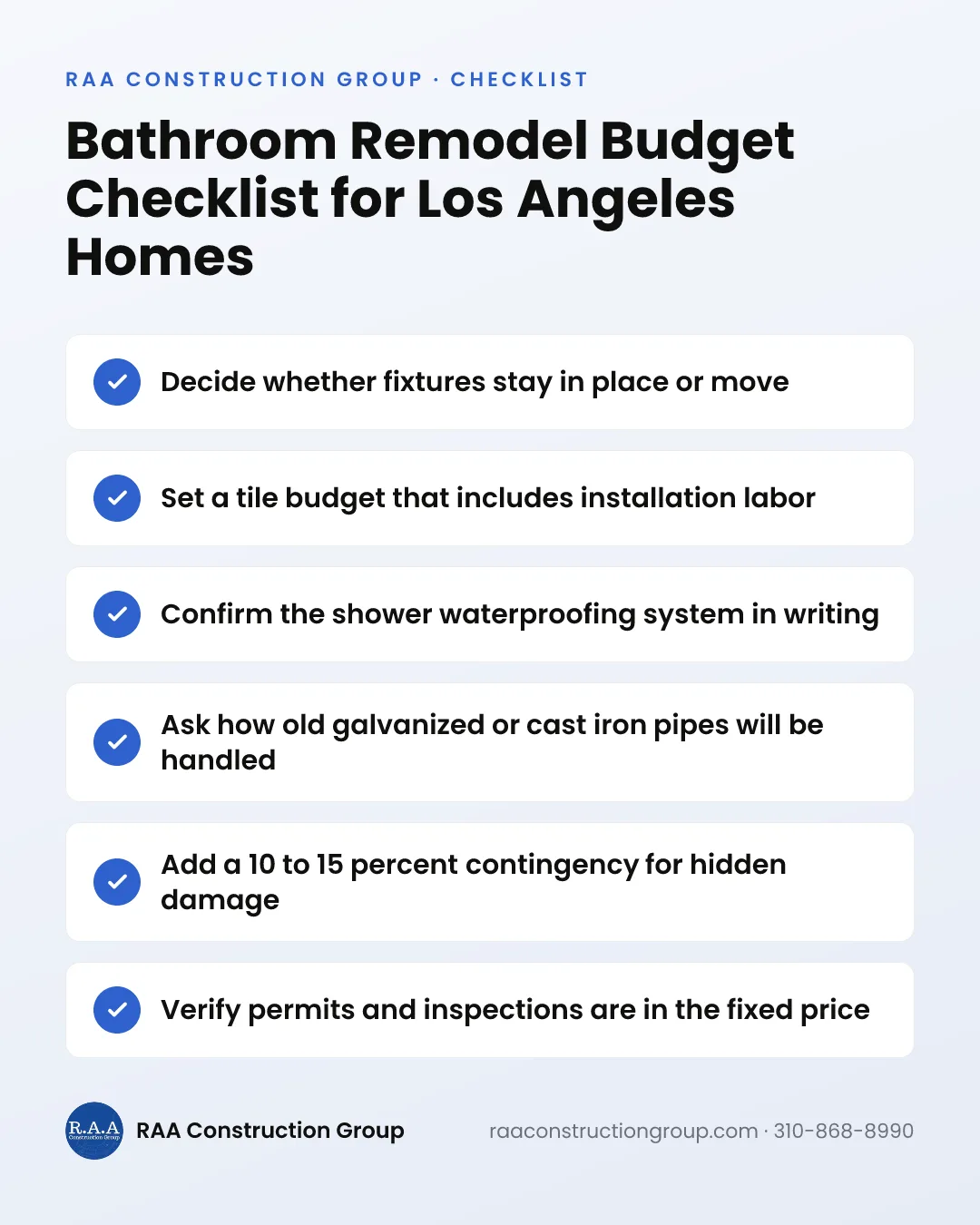
Hold off if the tub is the only one in the house and you have young children, or if someone relies on soaking for sore muscles. In those cases, a better plan may be converting one bathroom and upgrading the tub in another. Our guide to small bathroom remodel ideas covers layouts that keep a tub without sacrificing space.
Curbless vs Curbed: Which Walk-In Shower Fits Your Bathroom
A curbed shower has a low threshold, usually 2 to 4 inches tall, that keeps water inside the pan. It works on almost any floor, costs less, and is more forgiving if the glass enclosure is small. For most hall baths, a curbed walk-in shower is the practical choice.
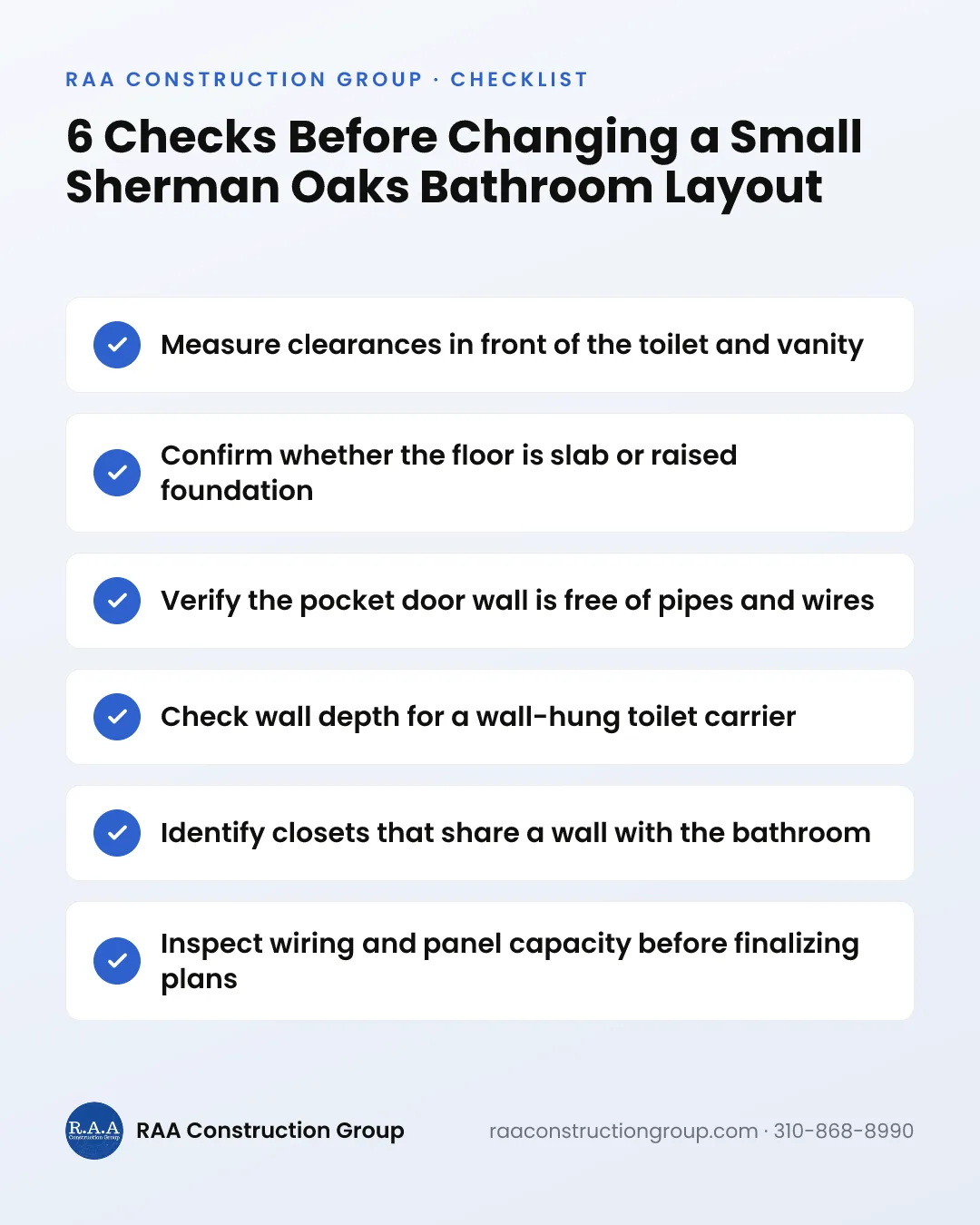
A curbless shower runs the bathroom floor straight into the shower with no step. To get water to slope toward the drain, the shower floor has to sit lower than the surrounding floor. On a slab foundation, that means cutting and recessing the concrete around the drain. On a raised foundation, common in older Valley homes, it means lowering the framing in the shower area, sometimes with input from an engineer.
- Curbed pros: lower cost, shorter schedule, works with existing floor heights
- Curbed cons: a step to clear, a visible break in the floor tile
- Curbless pros: no trip hazard, wheelchair and walker friendly, a clean open look
- Curbless cons: higher cost, more structural work, needs careful slope and glass planning
If you go curbless, ask about a linear drain along the back wall. It lets the floor slope in one direction, which allows larger tiles and keeps water farther from the bathroom floor.
Tub to Shower Conversion Cost in Woodland Hills
The figures below are typical Los Angeles-area ranges we see for a walk in shower remodel in Woodland Hills. They vary with scope, finishes, and site conditions, and they are not quotes. Your number depends on what we find once the tub comes out.
- Basic curbed conversion in the existing alcove with standard tile and glass: roughly $12,000 to $22,000
- Mid-range curbed shower with a niche, bench, upgraded tile, and frameless glass: roughly $20,000 to $35,000
- Curbless conversion with a recessed floor, linear drain, and new floor tile: roughly $28,000 to $50,000 or more
- Conversion as part of a full bathroom remodel: priced with the rest of the room
Curbless shower cost runs higher for specific reasons. Cutting a slab or reframing a floor adds labor, and the bathroom floor tile usually has to be replaced so it can flow into the shower. Moving the valve, adding a second showerhead, or relocating the drain also adds plumbing time and inspection steps.
For a full room budget, including vanities, lighting, and ventilation, see our breakdown of bathroom remodel cost in Los Angeles.
Shower Waterproofing Systems That Hold Up
Tile and grout are not waterproof. Water passes through grout lines every day, so what keeps your walls and subfloor dry is the layer behind the tile. Most failed showers we tear out had a waterproofing problem, not a tile problem.
- Sheet membranes such as Schluter Kerdi or an equivalent, bonded to the walls and floor and tied into a matching drain
- Liquid-applied membranes rolled on in multiple coats to a specified thickness, good for niches and odd shapes
- Traditional mortar bed with a liner or hot mop, long used in California, reliable when built correctly but heavier and slower
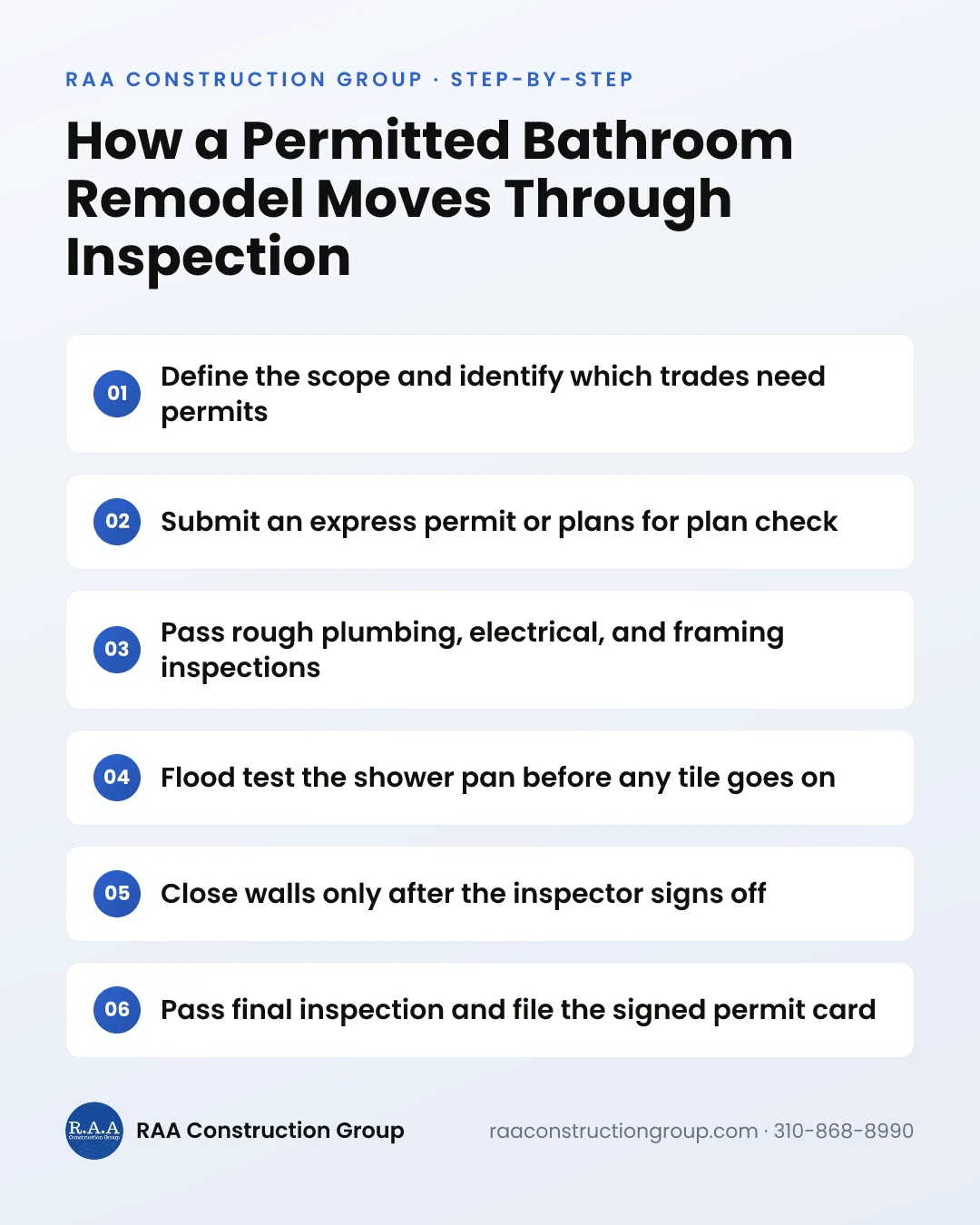
Whichever system you choose, the shower pan should be flood tested before any tile goes down. We plug the drain, fill the pan, and leave it for 24 hours to confirm no leaks. In the City of Los Angeles, the pan is typically inspected and water tested by LADBS as part of the permit process.
We back our shower installations with a one-year workmanship warranty, but the real goal is a shower that stays dry for decades. That is why we never skip the flood test, even on small jobs.
Ask any contractor which waterproofing system they use and whether they photograph the membrane and flood test. If they cannot answer clearly, keep looking.
The Conversion Process, Step by Step
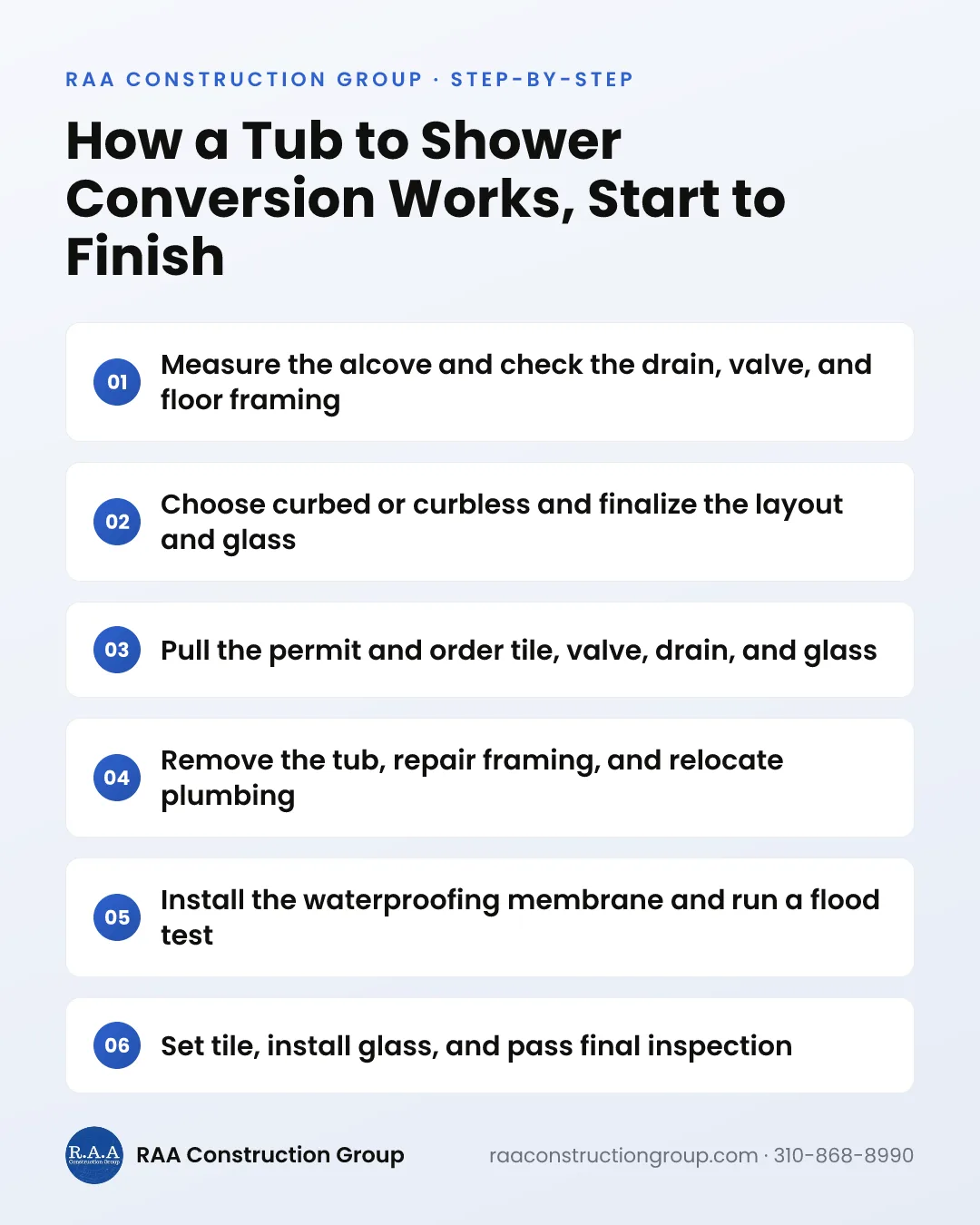
Here is the sequence we follow on a typical tub to shower conversion. A straightforward curbed job usually takes one to three weeks of construction once materials are on site. Curbless work, structural repairs, or plumbing moves add time.
- 1Site visit: measure the alcove, check the drain location, valve, and whether the floor is slab or raised
- 2Design: choose curbed or curbless, tile, niche and bench locations, valve height, and glass style
- 3Permit and ordering: submit for the plumbing permit and order long-lead items like custom glass and specialty tile
- 4Demolition: remove the tub, tile, and backer, then inspect framing and subfloor for water damage
- 5Rough work: repair framing, recess the floor if curbless, and relocate the drain and valve as needed
- 6Rough inspection: the inspector reviews plumbing before walls close
- 7Waterproofing: install the membrane, flood test the pan, and complete the pan inspection
- 8Tile and fixtures: set tile, grout, install trim, and measure for glass
- 9Glass and final: install the enclosure, caulk, and pass final inspection
Not sure whether your project needs a permit? Our article on bathroom remodel permits in Los Angeles explains when one is required.
Mistakes We See on Tub-to-Shower Projects
We get called to fix a lot of conversions done by handymen or rushed crews. These are the issues that come up most often.
- Reusing the 1.5-inch tub drain instead of upgrading to a 2-inch shower drain, which can cause pooling
- Too little or too much floor slope, leaving standing water or a floor that feels tilted
- Placing the valve directly under the showerhead so you get soaked turning it on
- Skipping the flood test or tiling over a membrane with gaps at seams and corners
- Ignoring rotted subfloor or framing found during demo, especially on raised foundations
- Undersized glass on a curbless shower, letting water spray onto the bathroom floor
- No upgraded exhaust fan, so moisture lingers and mold follows
- Adding a niche on an exterior wall without addressing insulation and waterproofing
Most of these are invisible once tile is set, which is why you want a contractor who documents each stage.
Should You Keep One Tub for Resale?
Many buyers with young children look for at least one bathtub in the house. If you convert every tub, you may narrow your pool of buyers when it is time to sell. The common compromise we build is a walk-in shower in the primary bathroom and a tub kept or updated in the hall bath.
In family-oriented Woodland Hills neighborhoods like Walnut Acres and South of the Boulevard, keeping one tub is usually a safe choice. In a Warner Center condo, check HOA rules first, since many associations require review before plumbing or waterproofing work. For resale questions specific to your home, ask a local real estate professional.
If you are weighing your options, we can walk your bathroom and give you a clear plan. Learn more about our bathroom remodeling services, see the projects we handle across Woodland Hills, or schedule a free estimate.
Ready to Trade Your Tub for a Walk-In Shower?
Get a free on-site consultation and a fixed-price proposal for your Woodland Hills bathroom. Call 310-868-8990 or schedule online.
Schedule a Free EstimateFAQ