Roofing & Waterproofing · Santa Clarita · November 24, 2026 · 8 min read
Roof Inspection Before Buying a House in Santa Clarita: What to Check


A roof inspection before buying a house is one of the cheapest ways to avoid a five-figure surprise after closing. In Santa Clarita, where long summers and strong sun are hard on roofing materials, a roof that looks fine from the curb can be near the end of its life underneath.
We have inspected, repaired, and replaced roofs across Valencia, Saugus, Newhall, Stevenson Ranch, and Canyon Country for more than 15 years. This guide covers what a buyer's roof inspection should include, how roof certifications work in California, how SCV heat changes the math, and how to turn what the inspector finds into a fair credit or repair request.
Why a Roof Inspection Before Buying a House Pays Off in Santa Clarita
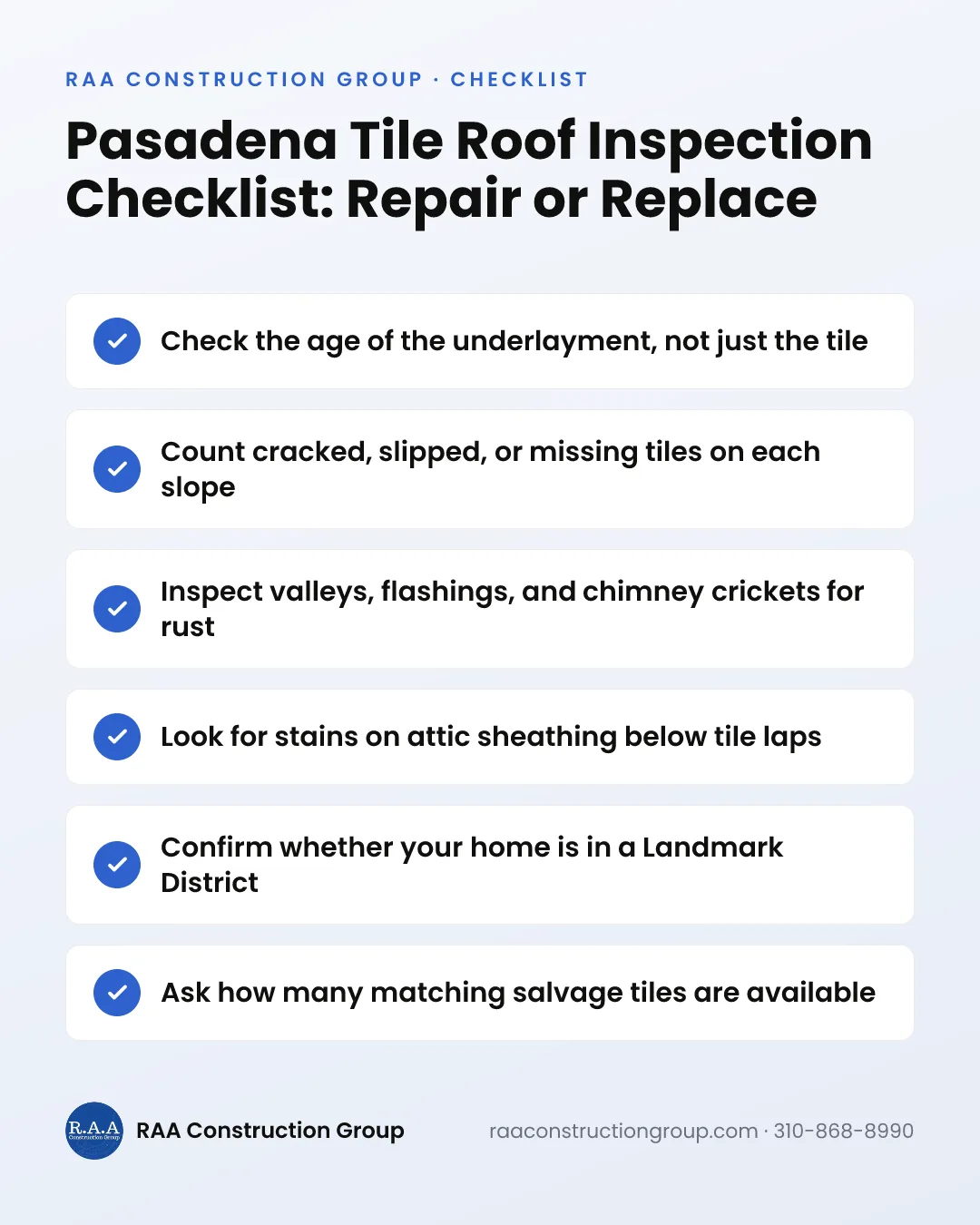
Many homes for sale in Valencia, Saugus, and Stevenson Ranch are tract homes built from the 1980s through the 2000s. A lot of them have concrete tile roofs, which look durable and often are. The problem is what sits under the tile.
The tiles themselves can last for decades, but the felt underlayment beneath them is what actually keeps water out, and it often wears out somewhere around the 20 to 30 year mark. In our projects, we regularly find homes from this era with good-looking tile and brittle, cracked underlayment that is one wet winter away from leaking.
Older homes near the original Newhall town center bring different issues: multiple layers of shingles, patched flat sections, and decking that has seen decades of small leaks. Either way, a roof problem discovered after closing is your expense. Discovered during escrow, it becomes a negotiating point.
General Home Inspector vs. a Roofer: Who Checks What
A standard home inspection includes the roof, but the depth varies. Many general inspectors view the roof from a ladder, with a drone, or from the ground, and some will not walk on tile because it breaks easily under foot traffic. Their report often ends with a recommendation to have a licensed roofer evaluate further.
A Santa Clarita roof inspection by a roofing contractor goes deeper. A roofer knows how to walk tile without cracking it, can lift a few tiles to see the underlayment, and can tell you whether a problem calls for a repair, a partial re-lay, or full replacement.
- General home inspector: visual overview, obvious damage, attic stains, notes for further evaluation
- Roofing contractor: material condition, underlayment, flashing details, remaining life, and a priced scope of work
- Best approach for most buyers: get the general inspection first, then bring in a roofer if the report flags anything or the roof is over 15 years old
What a Santa Clarita Roof Inspection Should Cover
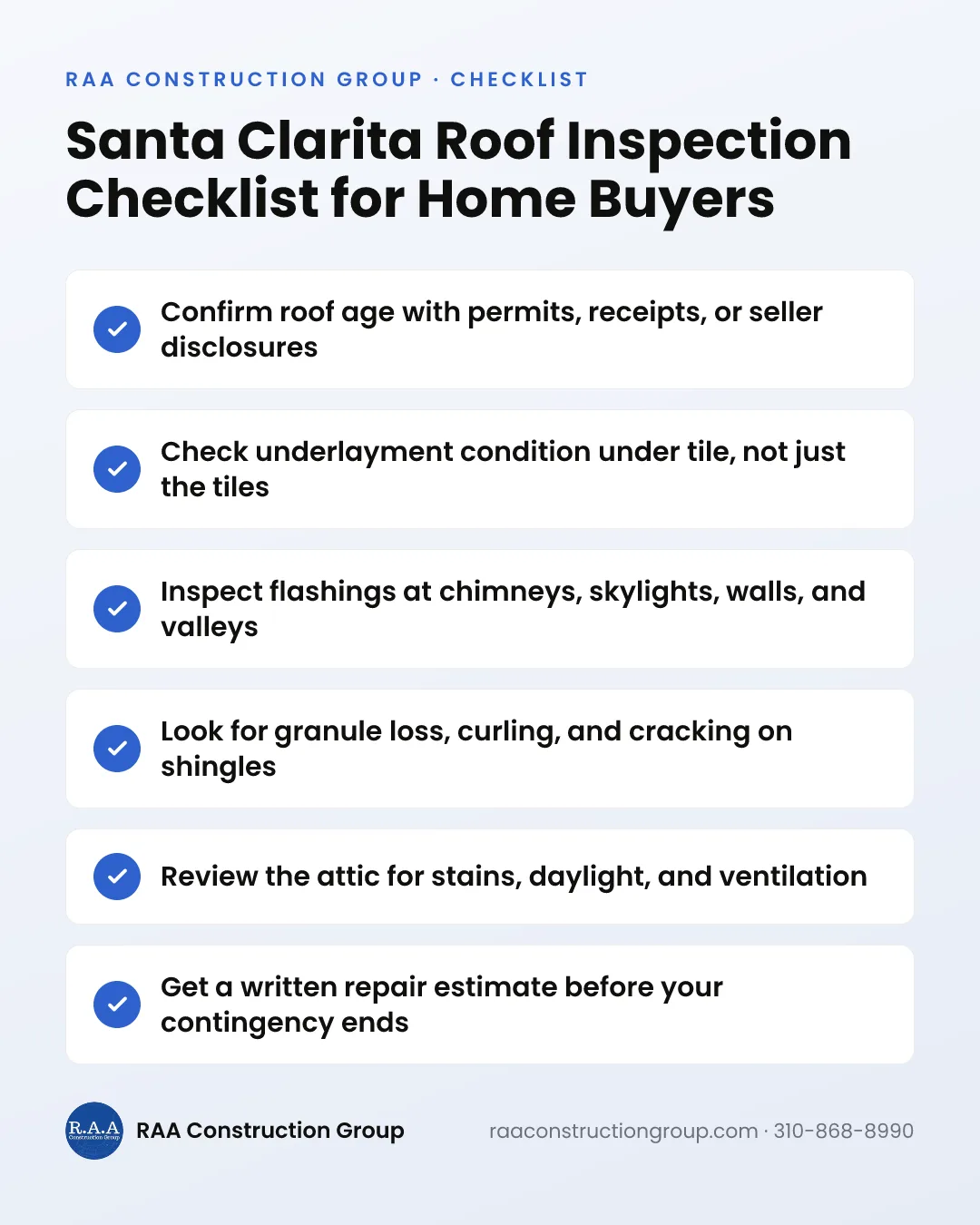
Whoever does the inspection, make sure the report addresses each of these areas, with photos. A report that just says the roof is in fair condition is not much use when you are negotiating.
- Roof surface: cracked, slipped, or missing tiles; curled, cupped, or bald shingles; blistering on flat roofs
- Underlayment: condition under a few lifted tiles, especially at the eaves and valleys where water concentrates
- Flashings: chimneys, sidewalls, valleys, and the transition where a second story meets a lower roof
- Penetrations: plumbing vents, exhaust fans, and solar mounts, which are frequent leak points
- Skylights: cracked domes, failed seals, and stains on the ceiling below
- Edges and drainage: drip edge, fascia rot, and gutters that overflow onto walls
- Attic: water stains, daylight through the decking, damaged sheathing, and ventilation
- Low-slope sections: patio covers, balconies, and flat areas over additions
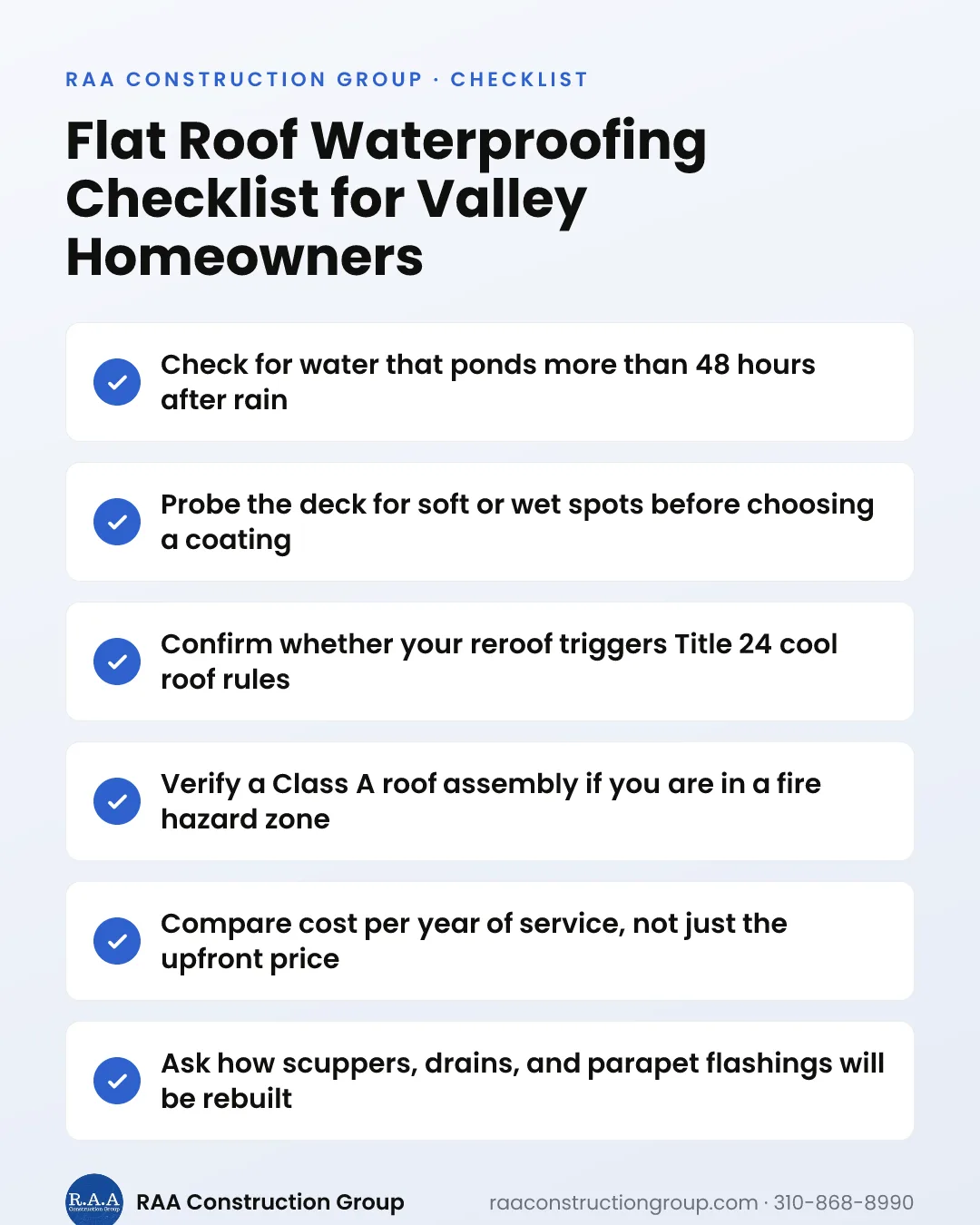
Flat sections deserve extra attention because they fail differently from sloped roofs. If the house has a flat roof over a family room addition or a balcony deck above living space, read our breakdown of flat roof waterproofing costs before you price repairs.
How SCV Heat, Sun, and Wind Age a Roof
Santa Clarita runs hotter than the coast, with summer afternoons that regularly push past 100 degrees. That heat and constant UV exposure break down asphalt shingles faster, driving off the oils that keep them flexible and loosening the protective granules. A shingle roof rated for a long life on paper may wear out sooner here.
Daily heating and cooling also stresses sealants. Caulked flashings, pipe boots, and skylight seals dry out and crack, which is why many leaks we find in the SCV start at a penetration, not in the field of the roof.
Santa Ana winds add another layer. Strong gusts lift shingle tabs, loosen ridge tiles, and drive debris into valleys. Ask the inspector to check ridges, hips, and rake edges specifically.
Some parts of Santa Clarita, especially hillside and canyon-edge neighborhoods, are mapped as Very High Fire Hazard Severity Zones. If the home is in one, a future reroof will generally need to meet ignition-resistant construction requirements, including a Class A roof assembly and ember-resistant details. Factor that into your replacement budget, and check the fire hazard map before you make an offer.
Ask the inspector to compare the south and west facing slopes to the north side. Those slopes take the most sun in the SCV, so they usually show wear first and tell you the most about remaining life.
Figuring Out Roof Age in a Home Purchase
Roof age is one of the biggest factors in a home purchase decision, and sellers often do not know it precisely. Do not rely on a verbal estimate. Look for evidence.
- Request permit history from the City of Santa Clarita building department; a reroof normally requires a permit and inspection
- Read the seller disclosures for roof repairs, leaks, or replacement dates
- Ask for invoices or warranty paperwork from the roofer who did the work
- Look for a contractor sticker or note in the garage or attic
- Compare to neighboring tract homes; original roofs in a subdivision tend to age together
As rough guidance, composition shingle roofs commonly last 20 to 30 years, sometimes less in high heat. Concrete tile can last far longer, but expect the underlayment to need attention around 20 to 30 years. If a Valencia tile roof is original to a 1990s home, plan on underlayment work in the near term even if the tiles look perfect. Our guide on tile roof repair vs replacement explains how that decision usually plays out.
Roof Certification in California: What It Covers and What It Doesn't
A roof certification in California is a document issued by a licensed roofing contractor stating that the roof is free of known defects and expected to perform for a stated period. There is no single government form, so terms vary by company. Some lenders, insurers, or buyers request one during escrow.
Certifications are useful, but read them closely. Most require the roofer to make repairs before issuing, and most exclude storm damage, foot traffic, and work by others such as solar installers. The term is usually a few years, not the life of the roof.
- Who issued it: if it came from the seller's roofer, consider an independent opinion
- What was repaired: ask for the itemized scope and photos
- Term and exclusions: know exactly what is covered and for how long
- Transferability: confirm it transfers to you as the new owner
A certification is not a substitute for your own roof inspection before buying a house. It tells you the roof should not leak in the near term. It does not tell you when you will need to replace it.
Negotiating Repairs or Credits After the Inspection
Your purchase contract gives you a limited window to complete inspections and request repairs, often a couple of weeks. Your agent will confirm the exact deadline. Use that time in this order:
- 1Get the inspection report with photos of every issue
- 2Get a written, itemized estimate from a licensed roofer for repair or replacement
- 3Decide whether to ask for seller repairs, a credit, or a price reduction
- 4Submit the request through your agent before the contingency expires
- 5If the seller makes repairs, ask for invoices and a finaled permit where one was required
- 6Schedule any credit-funded work promptly after closing, before the rainy season if possible
Credits usually give you more control than seller repairs. A seller has every incentive to hire the lowest bid, while a credit lets you choose the contractor, materials, and scope. Lenders can limit how credits are applied, so ask your lender and agent how to structure it.
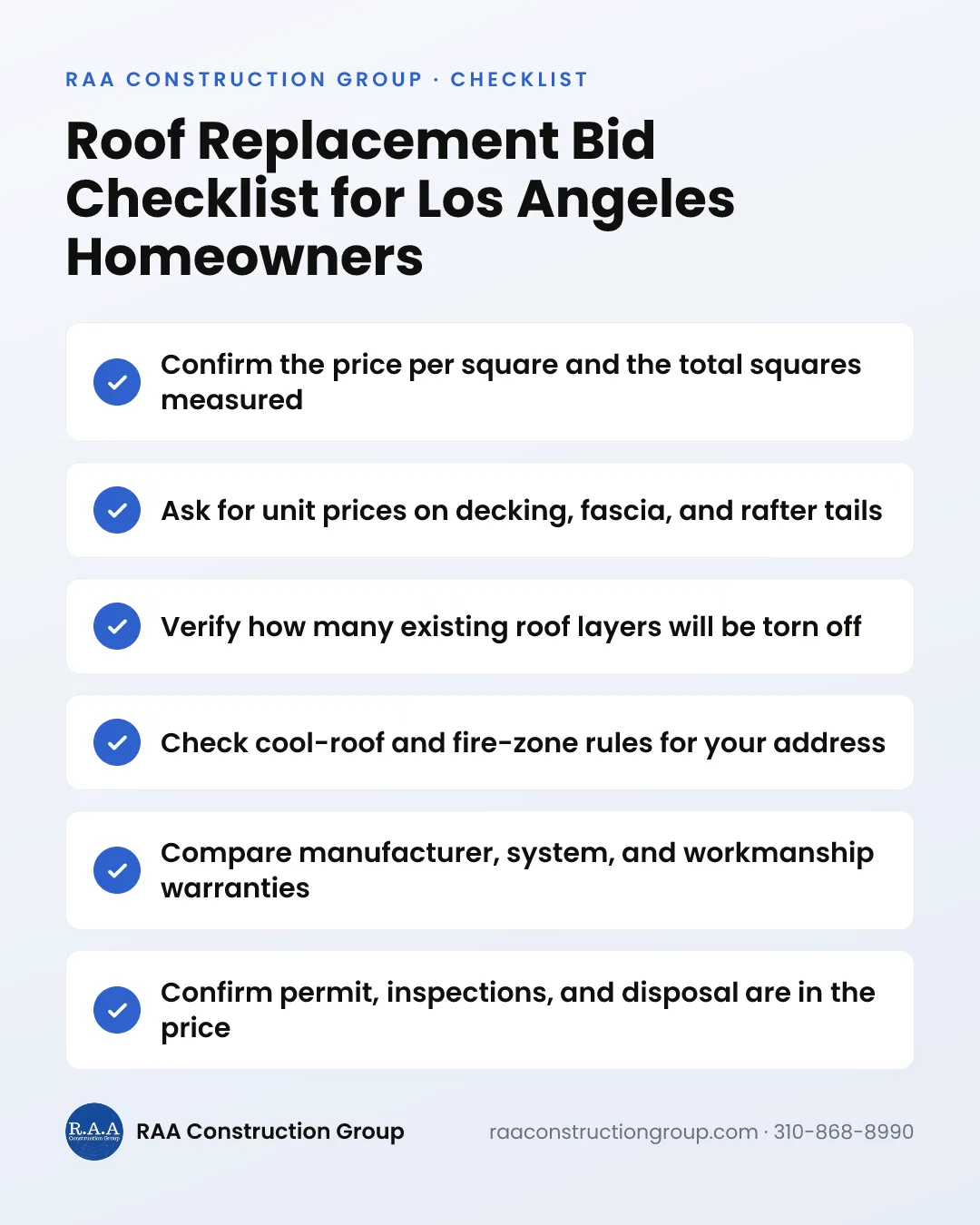
For budgeting, a typical Los Angeles-area range for replacing composition shingles on a single-story home of around 1,800 to 2,200 square feet is roughly $15,000 to $30,000, and tile underlayment replacement often runs higher. These numbers vary widely by scope and site and are not a quote. Our roof replacement cost guide breaks down the factors, and our post on signs a roof needs replacing helps you read what the inspector found.
A credit request backed by a written, itemized estimate from a licensed roofer is far harder for a seller to dismiss than a number pulled from the inspection summary.
RAA Construction Group (CSLB #1047380) provides roofing and waterproofing across Santa Clarita with fixed-price proposals. If you are in escrow and need a roofer's evaluation and written scope quickly, schedule a free on-site consultation or call 310-868-8990.
In escrow on a Santa Clarita home? Get a roofer's eyes on it.
We inspect the roof, document what we find, and give you a written, fixed-price scope you can use to negotiate. Call 310-868-8990 or book a free consultation.
Schedule a Free EstimateFAQ